Rider-Waite-Tarot

Entdecke die Botschaften, die das Universum für dich hat

0/500

Try Rider-Waite Tarot now for free. Online reading with AI interpretation in seconds, no signup required.

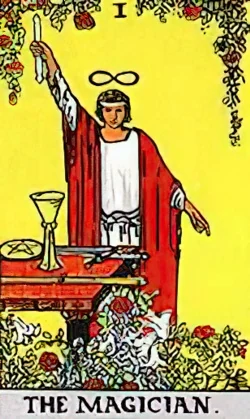
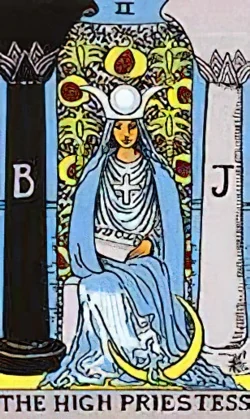
The Rider-Waite tarot is one of the most recognized decks in the world. Published in 1909 by Rider & Son in London, it contains 78 cards (22 major arcana and 56 minor arcana), all illustrated by Pamela Colman Smith under the direction of Arthur Edward Waite. This app lets you draw one or more cards online and read their interpretation in plain language, with no signup required. You frame your question, you draw, you read. The deck works equally well for a quick glance or for a detailed three-card or Celtic cross spread.

What is the Rider-Waite tarot?

The Rider-Waite tarot is a 78-card deck designed by Arthur Edward Waite and illustrated by Pamela Colman Smith, published in December 1909 by William Rider & Son. Its major innovation was to illustrate all 56 minor arcana with figurative scenes, where earlier decks like the Marseille used only geometric motifs for the numbered cards. This change made intuitive reading possible and accessible to beginners. Waite was a member of the Golden Dawn, an English hermetic order, and he infused the deck with Christian, kabbalistic, and astrological symbolism. Today, the Rider-Waite remains the reference of English-speaking tarot and the foundation of most modern decks.

How does this spread work?

You first pick the type of spread: a card of the day, three cards (past-present-future or situation-action-outcome), or a wider spread. You silently formulate your question, then click to shuffle and draw. Each drawn card appears with its name, its orientation (upright or reversed depending on the mode you chose), and a written interpretation. You can re-read the general meaning of the arcanum and how it connects to your question. The reading is instant and free. You can start over as often as you like, but it is recommended not to repeat the same question on the same day.

Tips for reading

Ask an open question rather than a closed one: prefer "what should I know about this project?" over "will I succeed?". The Rider-Waite is especially suited to deep questions, relationship dynamics, and life choices. For immediate yes/no answers, use the Yes or No Tarot instead. Take a few seconds before drawing to clarify your intent. Write down the cards you draw: revisited a few days later, they often shed clearer light on the situation. Avoid drawing repeatedly on the same topic.

Frequently asked questions

How many cards does the Rider-Waite tarot contain?

The deck has 78 cards in total: 22 major arcana numbered from 0 (The Fool) to XXI (The World), and 56 minor arcana split into four suits (Wands, Cups, Swords, Pentacles). Each suit has ten numbered cards and four court cards: Page, Knight, Queen, King.

What is the difference with the Marseille tarot?

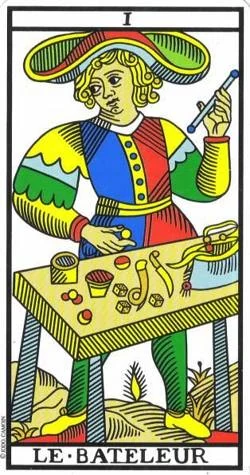
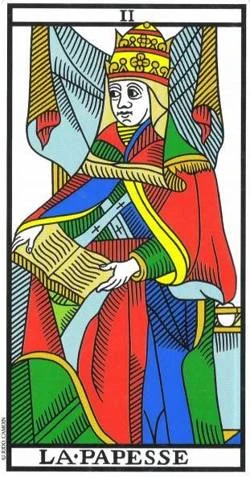
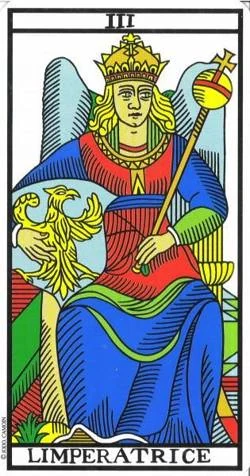
The Marseille tarot, older, has no illustrated scenes for the minors: its 2 of Swords, 5 of Cups, and so on are shown with geometric motifs. The Rider-Waite illustrates each card with a figurative scene, which makes intuitive reading and learning much easier.

Does an online reading have the same value?

The digital draw uses a reliable random shuffle. What matters is the quality of your question and your focus when you draw. An online reading done with seriousness is worth a physical one. The tool stays a support for reflection, not an infallible oracle.

What does a reversed card mean?

A card drawn upside down softens or reverses its meaning. For instance, Strength reversed can point to doubt, a loss of control, or misplaced effort. Not every school reads reversals; you can ignore them at the start if they bother you.