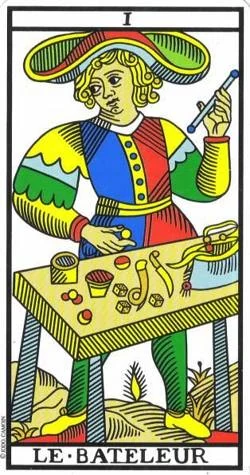
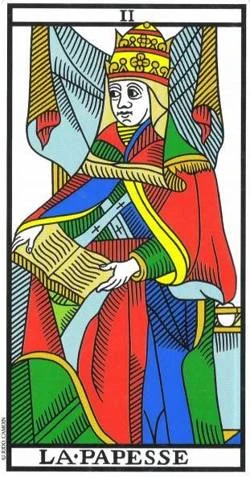
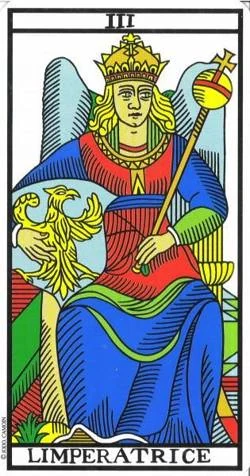
Marseille-Tarot

Entdecke, was die Karten dir offenbaren wollen

0/500

Wähle 3 Karten, die mit dir in Resonanz stehen

0/3 Karten ausgewählt

Interpretiere die Karten…
Deine Lesung

Try Marseille Tarot now for free. Online reading with AI interpretation in seconds, no signup required.

The Marseille tarot is the oldest European divinatory deck still in use. Set in its current form in the 17th century by the card makers of Marseille, it contains 78 cards: 22 major arcana and 56 minor arcana with geometric figures. This app lets you draw online using the classic methods (single card, three cards, cross spread), with an interpretation that respects tradition. The artwork uses the stencil-colored woodcuts that built the deck's reputation. You frame your question, you draw, and you read the meaning of the arcana in their purest form.

What is the Marseille tarot?

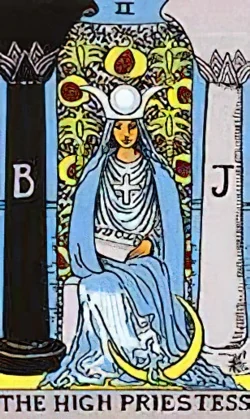
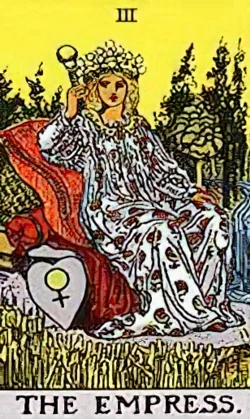
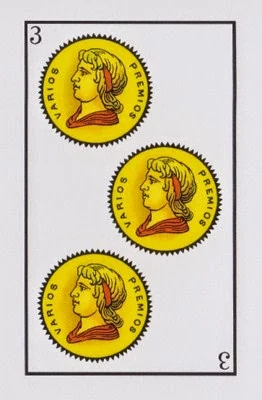
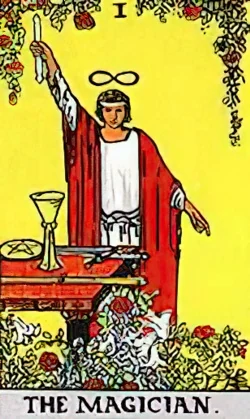
The Marseille tarot is a family of decks fixed between the late 17th and early 18th century by the card makers of Marseille, with Nicolas Conver (1760) remaining the canonical reference. It derives from older Italian decks, the 15th-century tarocchi. The Marseille tarot has 22 major arcana (The Magician, The High Priestess, The Empress, up to The World) and 56 minor arcana in four suits: Wands, Cups, Swords, Coins. A distinctive feature: the numbered minors are shown with geometric motifs rather than figurative scenes, which sets it apart from the Rider-Waite. Its reading relies on suits, numbers, and traditional symbols.

How does this spread work?

You pick the format: a one-card draw for the question of the day, a three-card draw to map out a situation, or a cross spread to explore a topic in depth. You frame your question silently, then start the shuffle. Each card drawn appears with its traditional name and its interpretation. The Marseille tarot also reads through the dynamics between arcana: where the figures look, contact between characters, dominant suit color. The app provides a card-by-card reading, enough for a self-guided consultation.

Tips for reading

The Marseille tarot suits life questions: trajectory, deep choices, family or work dynamics. Its old symbolism takes a bit of attention. Favor open questions, framed in the present tense. Avoid asking for exact dates. If you are starting out, stick to the major arcana: their 22 figures are enough for most readings. Write the cards in a notebook and come back later: a second look often clarifies what the first draw masked.

Frequently asked questions

Who created the Marseille tarot?

There is no single creator: the Marseille tarot is a collective tradition of card makers, set in Marseille between 1650 and 1760. Nicolas Conver's 1760 deck is often cited as the canonical reference, but older versions exist: Jean Noblet (1650), Jean Dodal (1701), Pierre Madenié (1709).

Should reversed cards be read?

The Marseille tradition did not systematically use reversals. Many modern readers read all cards upright and shade meaning with context. You can use either method: what matters is the consistency of your reading.

What do the four suits mean?

Wands evoke action, drive, work; Cups touch the affective realm, bonds, emotions; Swords concern thought, conflict, decisions; Coins point to the concrete, money, the body, and matter.

Is the Marseille tarot suitable for beginners?

Yes, as long as you start with the 22 major arcana. Their figures are expressive and well documented. The geometric minors require more practice. After a few weeks of daily draws, the deck's language becomes familiar.