Konsultiere die mystischen Karten des Lenormand-Orakels
Try Lenormand Cards now for free. Online reading with AI interpretation in seconds, no signup required.
The Lenormand tarot is a small 36-card deck named in tribute to Marie-Anne Lenormand (1772-1843), a famous Parisian cartomancer. Quite different from the classic tarot, it relies on everyday symbols: House, Letter, Ring, Coffin, Path, Bouquet. This app lets you draw online using the traditional Lenormand methods: three-card, five-card, or the Grand Tableau. The reading is concrete and factual, focused on events and people rather than inner states. You frame your question, you draw, you read the combinations.
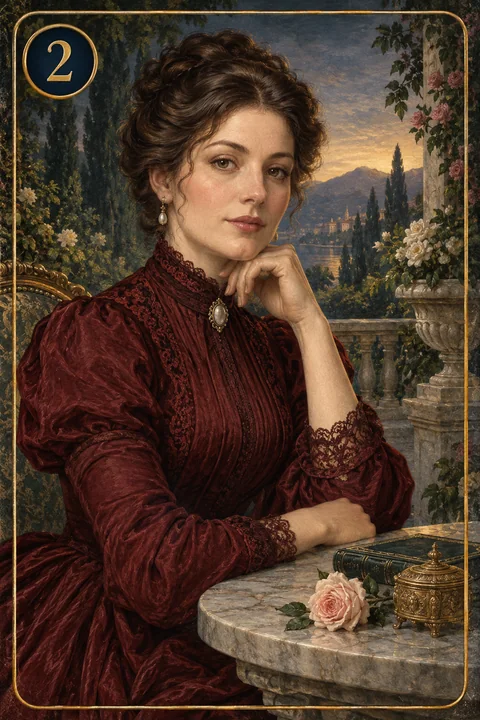
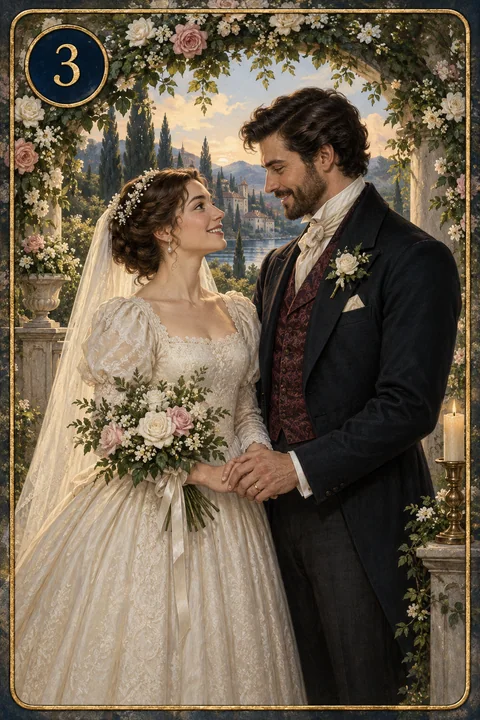
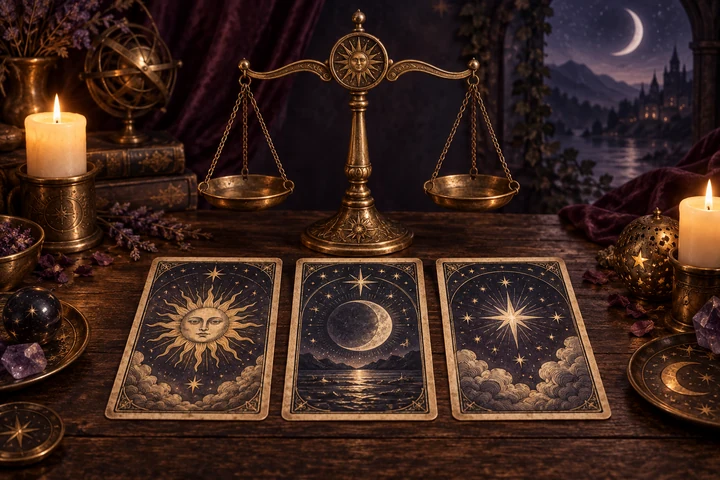
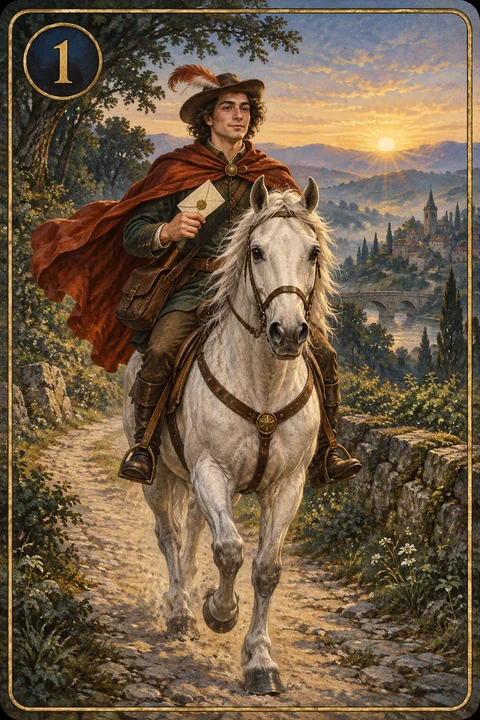
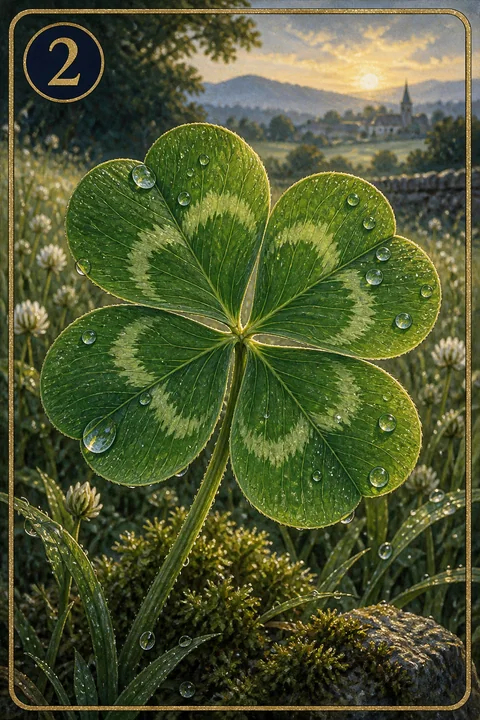
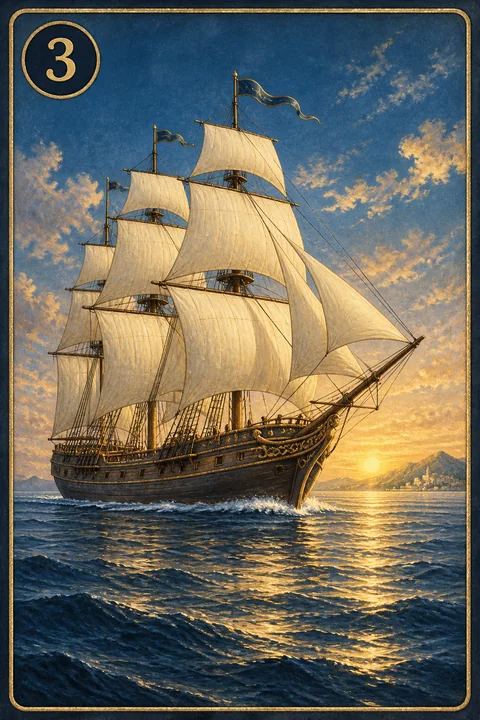
The Lenormand is a 36-card deck first published in Germany around 1846, shortly after Marie-Anne Lenormand's death. Despite its name, the Parisian cartomancer probably never used this deck in her lifetime: she mostly practiced the Petit Lenormand inspired by the Game of the Sibyl and a piquet deck. The current deck, known as the Petit Lenormand, rests on 36 symbols: Rider, Clover, Ship, House, Tree, Clouds, Snake, Coffin, Bouquet, Scythe, Whip, Birds, Child, Fox, Bear, Star, Stork, Dog, Tower, Garden, Mountain, Path, Mice, Heart, Ring, Book, Letter, Man, Woman, Lily, Sun, Moon, Key, Fish, Anchor, Cross.
The Lenormand reads in combinations: each card shapes the meaning of its neighbors. For a three-card spread (past-present-future or context-action-outcome), you frame your question, you draw, and you read the triple symbol. For example, Rider + Letter + House announces news reaching the home. The app offers the three-card spread, the five-card cross, and the Grand Tableau with 36 cards for deeper questions. Each card comes with its standalone meaning and a few classic combination cues.
The Lenormand answers concrete questions well: when, where, who, how. It is less suited to philosophical questions or pure moods. Ask a precise, time-bound question: "what is going to happen at work over the coming weeks?" rather than "who am I?". Learn to read in pairs first (House + Heart, Letter + Star), then in triplets. The Grand Tableau takes practice: start small. Write down your readings: the second look trains your eye.
Technically no. Tarot refers to 78-card decks with major and minor arcana (Marseille, Rider-Waite). The Lenormand is a 36-card oracle with a different reading logic. But the general public often groups both under the term tarot.
The deck derives from the Game of the Sibyl and the German piquet deck, which had 32 or 36 cards. This format allows the Grand Tableau, a grid of 36 cards laid out and read line by line, column by column, on diagonals, and at distances from the significator card.
Yes. Marie-Anne Adelaïde Lenormand (1772-1843) was a famous Parisian cartomancer during the Empire and Restoration. She is said to have advised Joséphine de Beauharnais, Talleyrand, and other figures of the era. The deck that bears her name is posthumous.
The Mice evoke erosion, gradual loss, nagging worry, slow exhaustion, sometimes petty theft. Paired with Money or Heart, it points to a decrease. It is one of the deck's negative cards, but its intensity stays moderate compared with the Coffin or the Scythe.