Entdecke dein Schicksal durch die Karten
Try Poker Tarot now for free. Online reading with AI interpretation in seconds, no signup required.
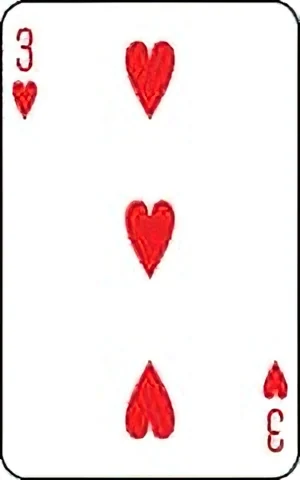
The Poker Tarot is a cartomancy that uses a regular 52-card deck (Spades, Hearts, Diamonds, Clubs) to answer your questions. This practice, sometimes called playing-card cartomancy or the Tarot of 52, goes back to the 18th century, well before the classic 78-card tarot became popular. This app lets you draw online using the most common methods: one card, three cards, seven cards. You frame your question, you draw, and you read the divinatory meaning given to each card based on its suit and rank.
The Poker Tarot, or playing-card cartomancy, uses the standard 52-card deck (without jokers, or sometimes with them). Each suit has a symbolic dominant: Hearts for love and feelings, Diamonds for money and news, Clubs for work and steps, Spades for obstacles and conflicts. The court cards (Jack, Queen, King) often represent people. This practice predates esoteric tarot: the first documented methods date from the 18th century, including Etteilla's oracle (1770), which systematized the reading of ordinary cards before he created his own tarot.
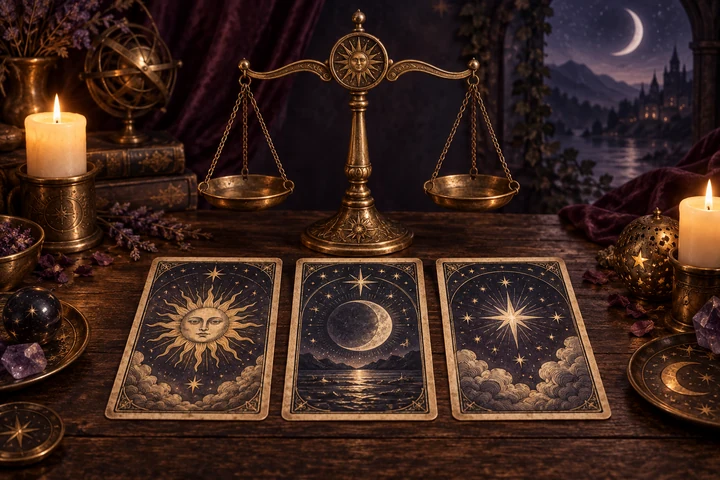
You pick the format: one card for a quick answer, three cards to map out a question, seven cards for a fan reading. You frame your question silently and draw. Each card appears with its suit, rank, and interpretation. The reading combines two elements: the suit names the area of life concerned, the rank specifies the intensity or the timing. An Ace marks a beginning, a 10 a fulfillment, court cards point to people. Several Spades announce a difficult period; a dominance of Hearts, a favorable emotional climate.
The Poker Tarot suits concrete, short questions well. Ask a clear question, bounded in time (this week, this month). Count the dominant suit in your spread: three Clubs announce an active period at work, four Spades flag a zone of tension. Do not overinterpret a single isolated card: it is the whole that speaks. If you find the Poker Tarot too dry, complement it with a Rider-Waite, more narrative.
Like any divinatory tool, the 52-card deck does not predict the future literally. It serves as a support for reflection: the random combination of cards points to themes you can then test against your situation. Reliability depends on the quality of your question and your attention, not on the deck itself.
The classic tarot has 78 cards, including 22 major arcana with strong symbolic figures (The Hanged Man, Death, The World). The 52-card deck lacks these majors: it reads only with suits and ranks. The reading is faster, more down-to-earth, less narrative. Many traditional cartomancers use only the 52 cards.
Several Spades in a single spread announce a heavy period: tensions, obstacles, conflicts, worries, sometimes a health point to watch. It does not mean disaster, but invites caution. A spread where Spades dominate calls for checking other signals: a Club or a Heart in support softens the picture considerably.
No. An ordinary deck of cards works perfectly, new or worn. Some readers prefer a deck dedicated to cartomancy, never used for play, for clarity. Others draw with any household deck. What matters is your concentration at the moment of the draw.