Shell Oracle

The Oracle of the Seas

🐚

Since time immemorial, coastal shamans have read destiny in the shells the sea casts upon the shore. Each spiral holds the ocean's whisper, each shell carries the will of the tides engraved within. Focus your mind, form your inner question, and let the sea speak.

Focus your mind on a question. When you are ready, cast the shells into the sea.

Try Shell Casting now for free. Online reading with AI interpretation in seconds, no signup required.

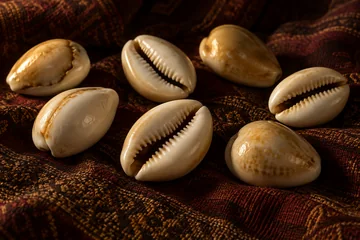
Conchomancy is the divinatory art of interpreting the arrangement of shells thrown onto a flat surface. Practiced for millennia on the West African coasts, it crossed the Atlantic with the Yoruba diaspora and took root in the Caribbean and Brazil, under the names ifa game or buzios. Cowries, the small white shells with a slit back, play a central role. This app reproduces the ritual: you frame your question, you symbolically throw the cowries, and you read the configuration formed according to the codes inherited from the Yoruba tradition.

What is conchomancy?

Conchomancy, or cowrie divination, is one of the most complex oracle systems in the world. Originating in Yoruba culture in West Africa, especially in Nigeria and Benin, it generally uses sixteen cowries (Cypraea moneta), small shells with one smooth face and one slit face. The associated oracle system, called ifa, rests on 256 possible configurations called odu, each tied to a corpus of sacred narratives. With the Atlantic slave trade, the practice took hold in the Americas: it appears in Cuban Santería under the name diloggun, in Brazilian Candomblé under the name jogo de buzios, and in Haitian Vodou.

How do you read the shells?

The practitioner has sixteen purified and consecrated cowries. They frame the question on behalf of the querent, shake the shells in cupped hands, then throw them onto a mat or tray. You then count the number of cowries fallen mouth up (slit face visible): this number, between 0 and 16, designates a specific odu, carrying a narrative and a piece of advice. A second throw refines the reading. Cowries far from the center, or fallen face down together, receive particular interpretations. The app reproduces the throw and indicates the configuration obtained with its traditional meaning.

Tips and respect for the tradition

Conchomancy is a sacred practice for the Yoruba, Afro-Cuban, and Afro-Brazilian communities. Online use offers a respectful discovery, with an educational and contemplative purpose, and not a substitute for the initiation ritual practiced by a babalawo or an iyalorisha. Approach each reading with reverence, frame a sincere question, and read the answer as an invitation to reflection. For a binding consultation on major life questions, turning to an initiated practitioner remains preferable.

Frequently asked questions

What is a cowrie?

The cowrie (Cypraea moneta) is a small marine shell native to the Indian Ocean, long used as currency in West Africa and Asia. Its slit face, like a mouth, made it a symbol of speech, oracle, and wealth in Yoruba and related cultures.

How many cowries in a reading?

The classical tradition uses sixteen, a sacred number in ifa. Some simplified variants use four, eight, or twelve cowries. The 256 possible combinations in the sixteen-cowrie version form a complete oracle corpus, comparable in richness to the Chinese I Ching.

What is an odu?

An odu is an oracle configuration of ifa, to which a traditional narrative, a proverb, and a piece of advice are tied. Each of the 256 odu has its name and meaning, passed down orally by the babalawos, initiated priests of the Yoruba tradition.

What is the difference with tarot?

The tarot rests on 78 illustrated cards, read in narrative chain. Cowries rest on 256 numerical configurations tied to oral narratives. Where tarot offers a reading in images, cowries transmit a mythological knowledge: the practice requires a long apprenticeship in the associated tales.