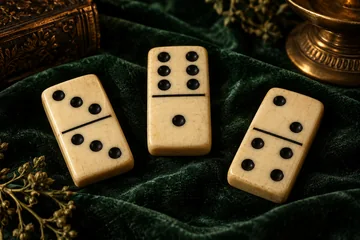
Dominomantik

Die Kunst, das Schicksal in den Steinen zu lesen

Jeder Dominostein ist eine Botschaft des Universums. Wähle deine Ziehung, suche deine Steine mit Absicht und entdecke, was die Zahlen für dich bereithalten.

Wähle deinen Stein

Schließe die Augen, atme und lass deine Hand führen

0 / 1 ausgewählt

Befrage die Zahlen des Schicksals…
Deine Lesung

Try Dominomancy now for free. Online reading with AI interpretation in seconds, no signup required.

Dominomancy is the divinatory art of interpreting domino tiles drawn at random. The domino game, brought into Europe from China in the 18th century via Italy, very quickly found a divinatory use in popular French and English traditions. Each tile, a combination of two values from 0 to 6, receives a specific meaning codified in 19th-century manuals. This app reproduces the protocol: you frame a question, you draw one or three tiles, and you read their meaning. Simple and accessible, dominomancy offers a finite set of 28 combinations easy to memorize.

What is dominomancy?

Dominomancy is divination by dominoes. The game has 28 tiles in a classic double-six set, each showing two values between blank (zero) and six. In the divinatory tradition, each tile receives its own interpretation, inherited from 19th-century popular European manuals, especially English and French occultist literature. The seven doubles (from double-blank to double-six) hold a special place, as they reinforce or symbolize the most striking energies. This practice belongs to the broad family of cleromancy, divination by lot drawing, alongside dice, knucklebones, and shells.

How do you draw the dominoes?

You shuffle the 28 tiles face down, then frame your question. You then draw one tile for a quick answer, or three for a past-present-future reading. The drawn tile is not put back into the set before the session ends, to avoid repetitions. Each tile is read along the combination of its two faces: the double-six announces success, the six-two advises patience, the double-blank warns of a delay. Doubles, rarer in a three-tile draw, are particularly meaningful. The app draws randomly and offers the traditional interpretation.

Tips for questioning the dominoes

Limit yourself to three draws per session: beyond that, the meanings blur. Draw on a dark mat or black cloth, to see the dots better. Ask a clear, open question that allows a nuanced answer. Avoid drawing for someone else without their consent. Keep a notebook where you record the question, the tile, and the interpretation: over time, you will see some tiles return insistently, a signal that a theme deserves your attention.

Frequently asked questions

What does the double-six mean?

The double-six is traditionally the most favorable tile. It announces a striking success, a project coming to fruition, a happy marriage, or prosperous news. Its statistical rarity (only one tile out of 28) reinforces its impact when it comes up.

And the double-blank?

The double-blank, or double-zero, is the least favorable tile in the divinatory tradition. It announces a delay, a stalled project, a period of emptiness or silence. Without being outright negative, it invites patience before any important decision.

How many tiles to draw?

One for a quick answer; three for a reading in past-present-future perspective; never more than five, or the meaning dilutes. Three remains the classic format of 19th-century manuals, the best balanced.

Where do divinatory dominoes come from?

Dominoes reached Europe from China in the 18th century, via Italian ports. The divinatory use developed in France and England in the early 19th century, in parallel with the rise of occultist tarot, in the same wave of popular divinatory arts.