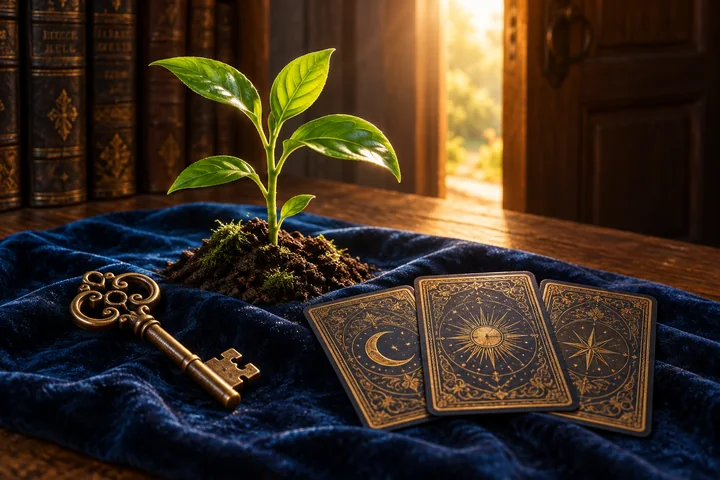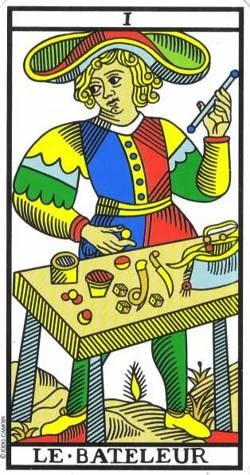
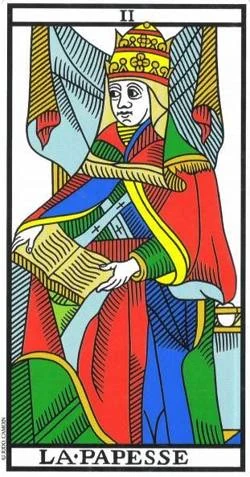
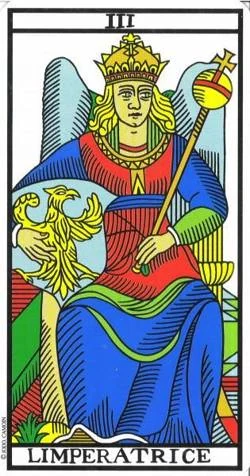
Wähle 3 Karten, die mit dir in Resonanz treten
Ask the Tarot: « How can I heal my emotional wounds? ». Get a personal answer with AI interpretation. Free, no signup.
"How can I heal my emotional wounds?" arises when a past still hurts in the present: a defining breakup, a bereavement, a betrayal, a childhood wound that replays in current relationships. The question is serious and calls for respect. Tarot does not replace therapy, but it offers a symbolic reading of the healing path: the wound active today, what keeps it alive, the support available to cross it. This page accompanies you in framing the question without rushing inner work, and in spotting the arcana that best speak to grief and repair.
An emotional wound does not disappear by hiding. It continues to act through excessive reactions, avoidances, repeated relational patterns. Tarot helps to identify the dominant wound currently being activated and to see what keeps it alive — triggering event, old belief, lack of current support. It also observes the resource already there that allows the crossing. Tarot does not heal by itself. For deep wounds — trauma, complicated grief, established depression —, working with a trained professional remains essential. The reading accompanies that process; it does not replace it.
A five-card spread illuminates the topic well: nature of the active wound, original root, available inner resource, gesture to make now, horizon of healing. Several Major Arcana speak strongly. Death evokes the necessary transformation after an ending, the work of grief. The Star marks gentle restoration, the reopening after the trial. The Sun evokes regained light. The Hanged Man proposes a time of suspension and rereading. The Three of Swords names the entrenched pain to cross. The Six of Swords evokes the passage to a new shore.
Draw in a moment of inner calm, not in the middle of an emotional wave. The reading will be clearer and less distorted by urgency. Prepare a reassuring frame: silence, perhaps a candle, a notebook to note without filter. Avoid drawing the same question several times to reassure yourself: healing follows a long rhythm that the cards cannot accelerate. Give yourself two to three months between readings, and if the emotion felt after the reading is intense, talk to a trusted loved one or a therapist.
No, not in the sense of a shortcut. It can illuminate angles that occasionally unblock the work, but emotional healing follows a time of its own. Wanting to accelerate it often creates new inner violence. Tarot rather invites the right rhythm, which is sometimes slower than one would like.
It happens. Do not stay alone with what comes up. Talk to a loved one, or ideally to a professional — psychologist, therapist. Tarot can open doors it does not know how to close again; qualified human support takes over. Consider the reading as a trigger, not as care.
A Strength or a Star as a resource often signals an inner availability. If the reading comes back mostly as Hanged Man and Moon, the time may not yet have come for frontal work. Respect that signal. The maturity of the moment counts as much as the will to heal.
Every three to six months. Deep wounds evolve slowly, and a too frequent reading reactivates without always liberating. A quarterly rhythm follows the path with perspective. Between readings, the notebook, talking with a loved one, and any therapeutic work do the real work. Tarot accompanies; it does not cure.