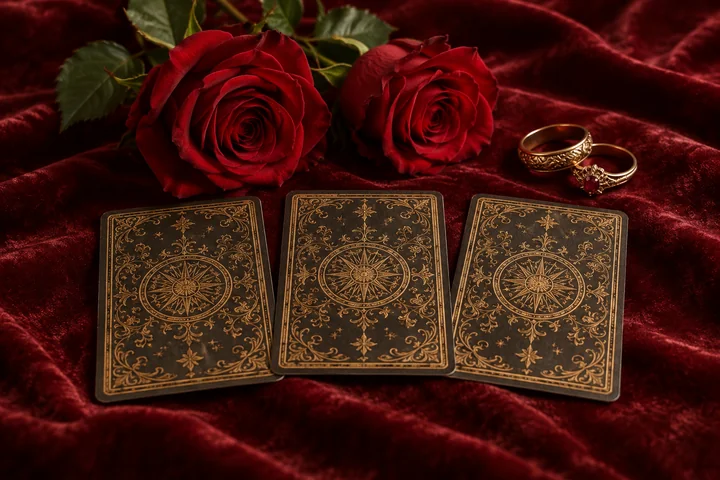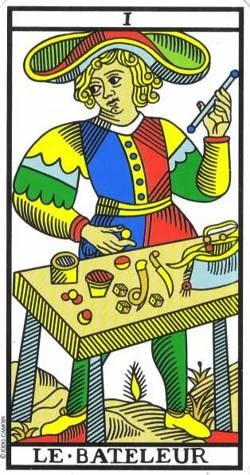
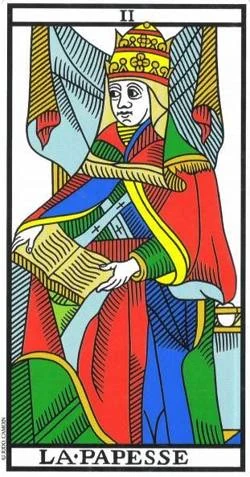
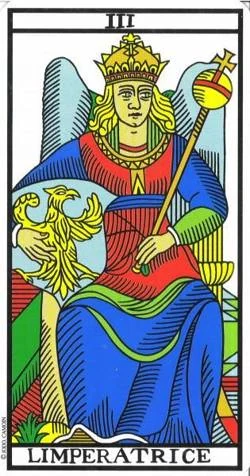
Wähle 3 Karten, die mit dir in Resonanz treten
Ask the Tarot: « Am I in a toxic relationship? ». Get a personal answer with AI interpretation. Free, no signup.
"Am I in a toxic relationship?" arises when a persistent doubt sets in: emotional exhaustion, the feeling of walking on eggshells, repeated belittling, progressive isolation. The question is heavy, because answering it carries consequences. Tarot does not replace the view of a therapist or a trusted loved one, but it offers a reading of the dynamics at play: what is being replayed, what weighs heavy, what can be named. This page accompanies you in framing the question with clarity and reading the arcana that best speak to bonds where power and wounding dominate the exchange.
The toxicity of a bond rarely shows itself head-on: it sets in through small touches, and the person involved doubts for a long time. Tarot offers an outside frame, one that does not judge, to put words on what is felt. It observes the nature of the exchange — balanced or unbalanced, nourishing or draining — and the repeated patterns that take hold. Tarot does not decide for you: it does not say "leave" or "stay." It reflects back what you already know deep down and did not dare to formulate. If physical violence is involved, the reading is secondary: qualified human support becomes the priority.
A five-card spread illuminates the subject well: your state in the relationship, the other person's state, the power dynamic between you, the emotional cost to you, the likely outcome if nothing changes. Several arcana mark toxicity. The Devil evokes dependency, the attachment that holds despite suffering. The Tower announces a necessary collapse of an untenable structure. The Five of Cups and the Three of Swords evoke entrenched pain. Conversely, the Star or the Six of Swords can indicate a way out or a path of healing already sketched.
Draw at a time when you are alone, calm, away from the other person's physical or phone presence. Note your bodily reactions as much as the cards: a sense of relief, a knot in the stomach, tears — these are important information. Do not draw to convince yourself to stay; do not draw to justify leaving either. Frame the question as an honest inquiry. If the reading reveals serious danger, do not face it alone: speak to a loved one or a professional.
No. Tarot is not a clinical tool. It can signal evocative dynamics — Devil, marked imbalance, isolation — that invite you to consult a professional trained in psychological abuse. Diagnosing coercive control belongs to qualified human support, never to a reading alone.
The Devil does not order a breakup. It names a charged attachment, a dependency, sometimes mutual. The question becomes: what holds me here, what am I feeding, what can I change on my side. The decision to leave or stay is yours, ideally with support.
Tarot often distinguishes the two. A passing period of tension appears differently from an entrenched pattern. Cards like Temperance, the Sun, or harmonious Cups mark a fundamentally healthy bond going through a difficult passage. Conversely, an accumulation of heavy arcana suggests a structural ground.
Yes, provided you do not turn it into absolute truth. The reading opens a question; it does not settle it. If the reading upsets you, share it with a trusted loved one or a professional. Do not loop back over the cards; use them as a trigger for conversation and support.