✦ ✦ ✦

Oráculo Gitano Ruso

─── ✧ ───

Concéntrate en tu pregunta y a continuación pulsa el botón comenzar.

Selecciona una de las seis cartas para comenzar la tirada.

Conexiones 0

Respuesta del Oráculo

Try Gypsy Deck now for free. Online reading with AI interpretation in seconds, no signup required.

The Gypsy Game, sometimes called "Gypsy Bridge", belongs to the divinatory tradition tied to the Romani peoples of Central and Eastern Europe. Roma travelers long practiced card reading, popularized in France from the 19th century in fairs and markets. The typical deck contains cards with narrative symbols: roads, bridges, crossroads, encounters, letters. The reading emphasizes the paths to travel and the encounters to come. This oracle suits questions of transition, life change, and orientation.

Origin and symbolism of the deck

The Romani peoples, originally from the northwest of India, migrated to Europe between the 10th and 14th centuries. The practice of palmistry and cartomancy followed these movements and is documented as early as the Renaissance in European chronicles. The card deck known as the Gypsy deck takes up symbols of travel: the bridge stands for transition, the crossroads for choice, the inn for the halt, the wheel for destiny. The numbering and illustrations vary by edition, but the narrative spirit stays constant: telling a journey rather than fixing a frozen diagnosis.

How the reading unfolds

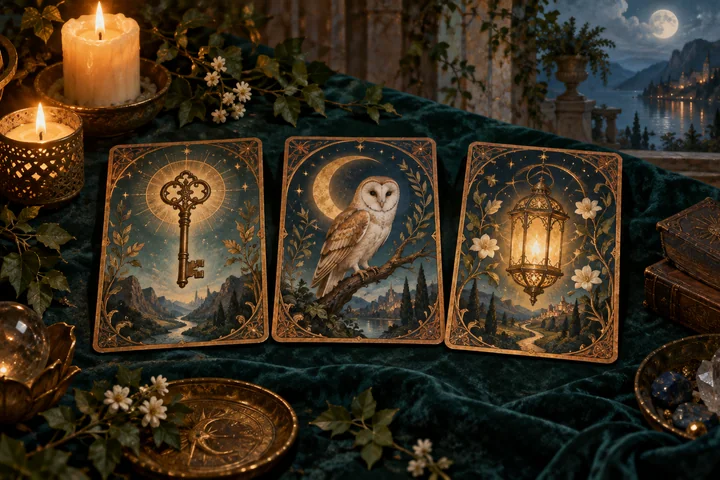
The app offers two main formats. The Bridge spread lays five cards in a row: starting point, first obstacle, resource, second obstacle, arrival. The seven-card fan widens the reading to a broader horizon including encounters and the unexpected. Each card is read on its own, then in the progression of the journey. Neighboring cards nuance each other: a road near a letter announces news that changes the path, a crossroads followed by a bridge signals a decision leading to a successful transition.

Reading a path rather than a destiny

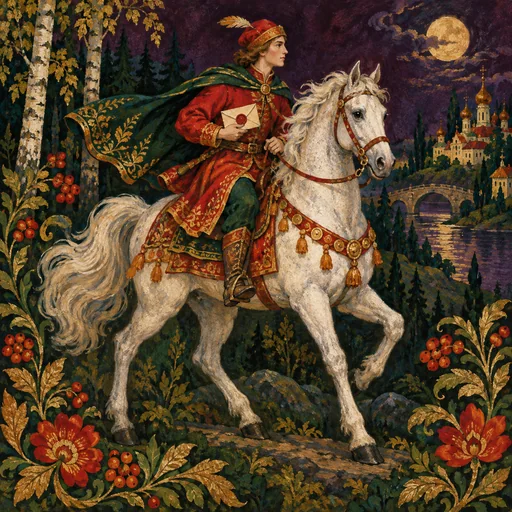
The Gypsy Game does not lend itself well to closed questions. Favor narrative phrasing: "what path is taking shape for this project", "what encounters to prepare for". Read the spread as a story, following the order of the cards. Symbols of movement (road, bridge, horse) signal an active dynamic. Symbols of stillness (inn, house, garden) invite a pause. Note matches with your week to sharpen your reading of the vocabulary and narrative structure specific to this deck.

Frequently asked questions

Is the Gypsy Game the same as the Petit Lenormand?

No, although both decks share a narrative approach and common symbols. The Petit Lenormand, fixed at 36 cards, follows a precise reading grid. The Gypsy Game stays freer, with a variable number of cards depending on the edition and an iconography inspired by travel.

Do I need to be of Romani origin to use this deck?

No. The deck is commercially published and accessible to everyone. The cultural origin feeds the symbolism, but the divinatory practice itself depends on no allegiance. A respectful reading simply means knowing the historical context of the Romani peoples.

Which type of question suits it best?

Questions of orientation: job change, moving, returning to study, travel plans, evolution of a relationship. The deck excels at describing a path and its stages. It is less suited to strictly material questions or precise timing queries.

Can the same question be redrawn the next day?

Better to wait a week to see how the situation evolves. An immediate new draw often reveals worry more than the answer. If you draw again, compare the two readings: shared cards flag the structural elements of the path.